Boise is easy to romanticize.
You see the foothills. You see the Boise River. You hear about short commutes, outdoor recreation, a growing downtown, and a major airport that is surprisingly easy to use.
Then you look at housing prices. Or summer temperatures. Or wildfire smoke. Or traffic on I-84.
The reality is that Boise can be a great place to live, but it is not automatically the right place for everyone.
Like any growing city, Boise has real advantages and real tradeoffs.
This guide looks at the pros and cons of living in Boise in 2026 so you can decide whether the city fits your actual lifestyle, budget, work situation, and long-term plans.
Living in Boise at a Glance
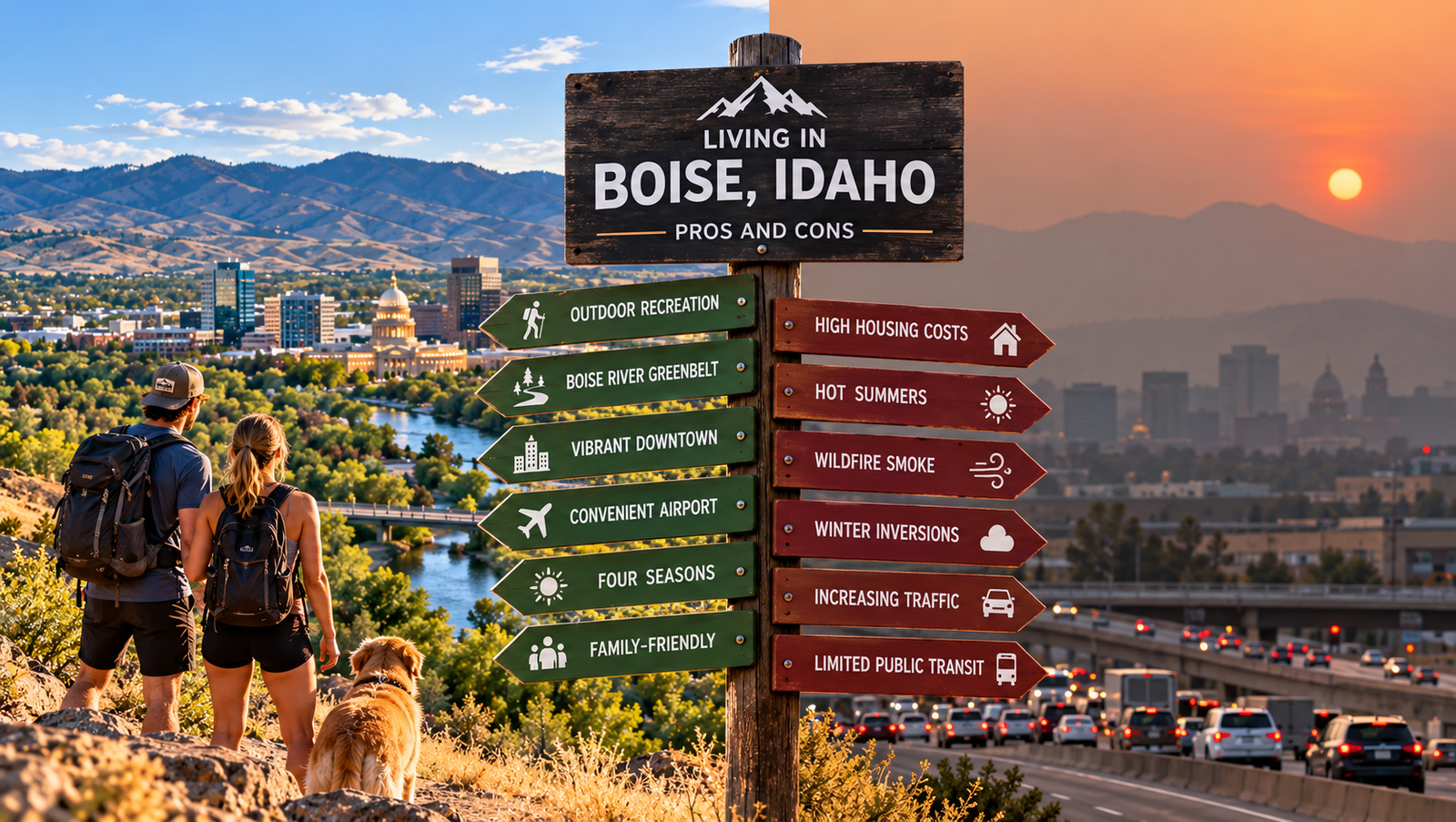
Some of Boise's biggest advantages include:
outdoor recreation
foothills access
Boise River Greenbelt
relatively manageable commutes
a compact downtown
strong airport access
four distinct seasons
family-friendly neighborhoods
growing restaurant and entertainment options
Some of the biggest drawbacks include:
expensive housing
rising rents
hot summers
wildfire smoke
winter inversions
increasing traffic
limited public transit
rapid regional growth
Whether those tradeoffs work for you depends on what you value.
Pro: Boise Has Excellent Outdoor Access
This is probably Boise's most obvious strength.
The city sits directly against the foothills.
Residents have easy access to hiking, mountain biking, trail running, camping, skiing, fishing, rafting, paddleboarding, and boating.
You do not have to drive hours just to get outside.
For many residents, outdoor recreation is part of normal weekly life.
Pro: The Foothills Are Right There
Boise's foothills are visible from much of the city.
That is not just scenery.
The Ridge to Rivers trail system gives residents access to a large network of hiking and biking trails directly from the edge of town.
In neighborhoods such as the North End and East End, trail access can be only minutes away.
Pro: The Boise River Greenbelt Is a Major Quality-of-Life Feature
The Boise River Greenbelt connects parks, neighborhoods, Boise State University, Downtown Boise, Garden City, and other areas along the river.
Residents use it for walking, biking, running, commuting, family outings, and river access.
Read our Boise Greenbelt Guide.
Pro: Downtown Boise Is Compact and Easy to Use
Downtown Boise is one of the city's strongest features.
It is large enough to provide restaurants, bars, breweries, coffee shops, events, concerts, hotels, offices, nightlife, and cultural attractions.
But it is still relatively compact.
You can park once and walk to multiple destinations.
Read our Ultimate Guide to Downtown Boise.
Pro: Boise Airport Is Extremely Convenient
Boise Airport is close to the city.
That alone is a major lifestyle advantage for frequent travelers.
The airport currently lists eight airlines serving 29 nonstop destinations, with one-stop connections to more than 350 cities worldwide.
For someone who travels frequently for work, the combination of airport proximity and a relatively manageable terminal can be a substantial advantage.
Read our Boise Airport Guide.
Pro: Boise Is Still Easier to Commute Around Than Many Major Cities
Traffic has become worse.
That is true.
But Boise is still far easier to navigate than many larger U.S. metros.
Someone living in the right neighborhood may have a short commute to Downtown, Boise State, Boise Airport, Micron, West Boise, or Meridian.
The key is choosing housing around your actual daily routine.
Read our Boise Commute Guide.
Con: Traffic Is Getting Worse
Boise's transportation advantage is slowly becoming less pronounced.
Treasure Valley growth continues putting pressure on I-84, Eagle Road, Meridian Road, Chinden Boulevard, State Street, and major intersections.
A house that appears only 12 miles from work may produce a much longer commute than expected if the route depends on a congested interchange.
Con: I-84 Problems Can Affect the Entire Metro
I-84 carries a huge portion of Treasure Valley traffic.
When there is a serious crash or closure, traffic can spill onto Franklin Road, Fairview Avenue, Chinden Boulevard, Eagle Road, and local arterials.
That means even people who do not normally use I-84 can feel the effects.
Pro: Boise Has Distinct Neighborhoods
Boise is not one giant suburban subdivision.
Different areas feel genuinely different.
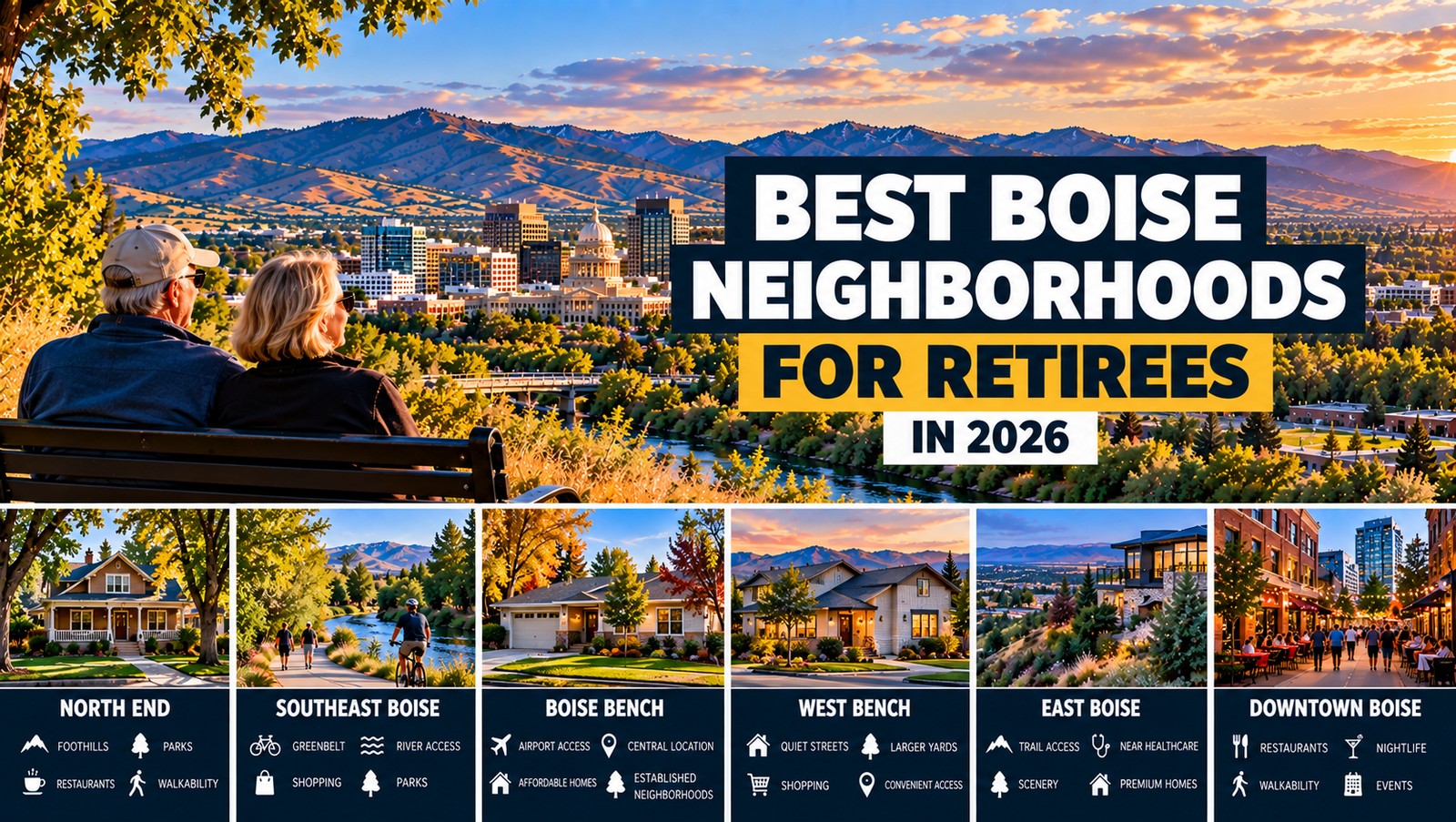
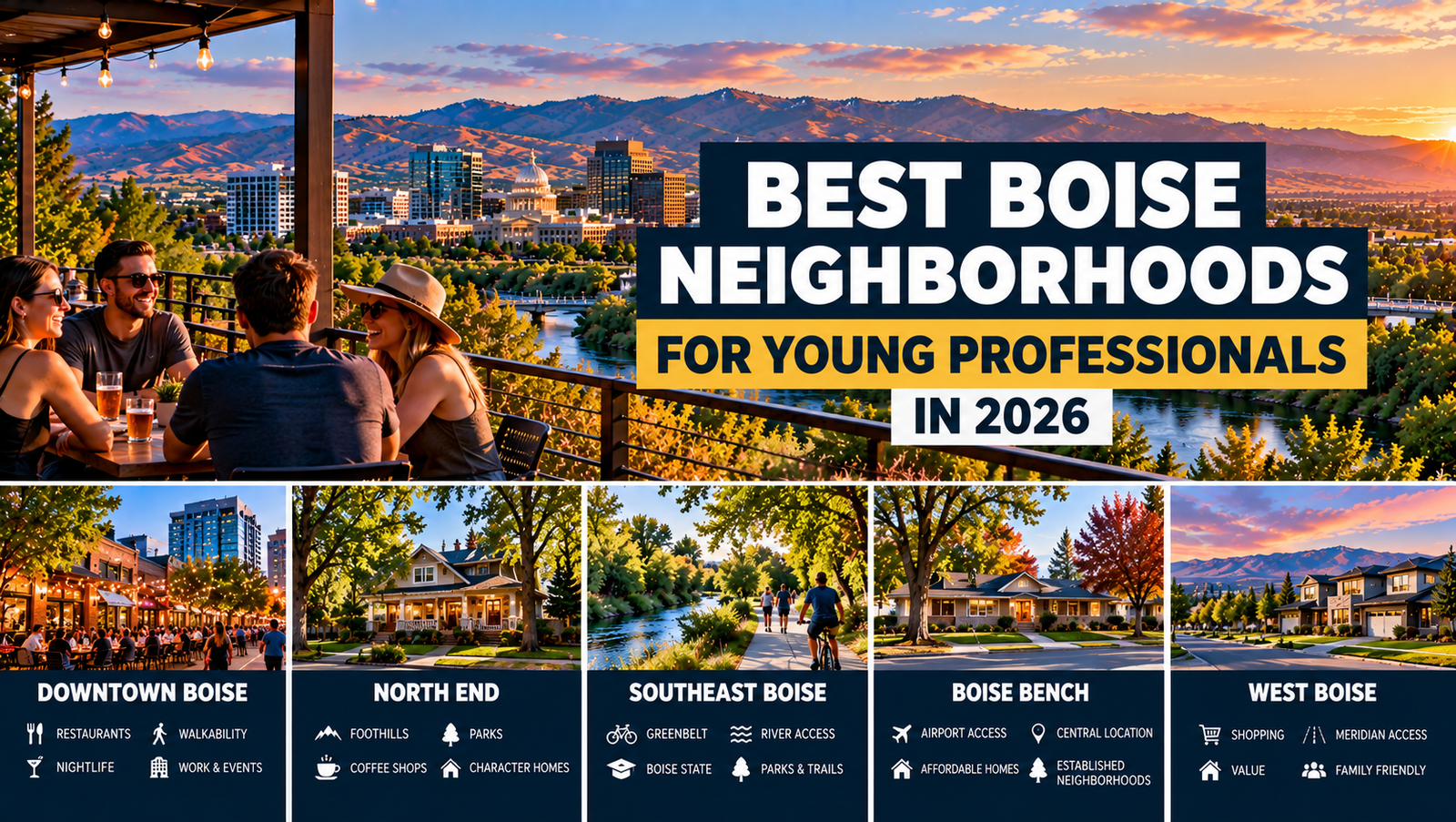
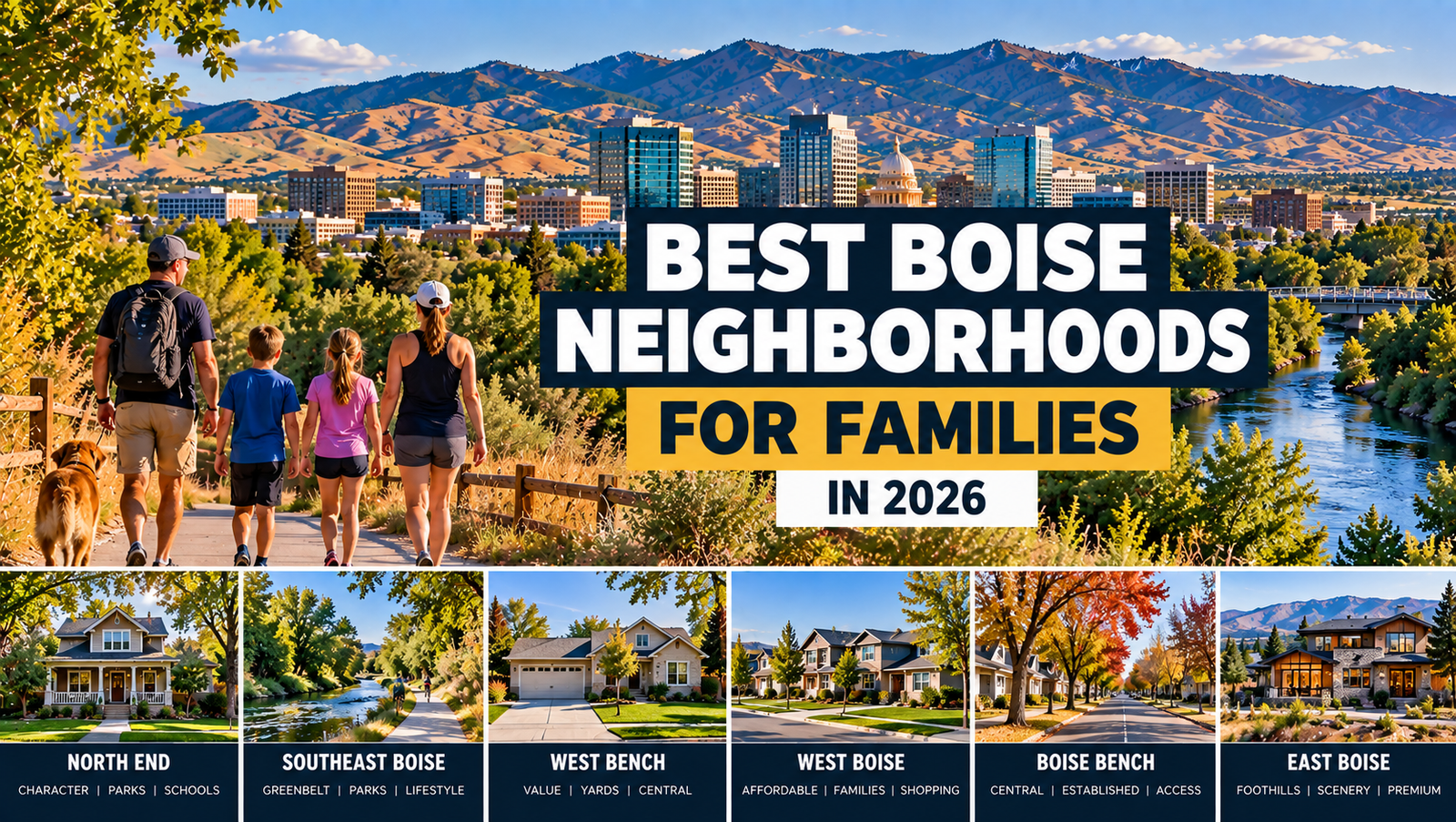
You can choose between historic neighborhoods, downtown apartments, foothills homes, older central neighborhoods, suburban West Boise, and river-oriented Southeast Boise.
That variety allows newcomers to choose around lifestyle rather than simply price.
Pro: The North End Has Real Character
Boise's North End is one of the city's best-known neighborhoods.
It offers mature trees, historic homes, Hyde Park, foothills access, and proximity to Downtown.
Read our Ultimate Guide to Boise's North End.
Pro: The Boise Bench Offers Central Convenience
The Bench is another strong example.
You can live relatively close to Downtown, Boise Airport, I-84, shopping, and restaurants without necessarily paying North End prices.
That central location can dramatically reduce how much time you spend driving.
Read our Ultimate Guide to Boise Bench.
Con: Housing Is Expensive
This is probably Boise's biggest disadvantage for newcomers.
Redfin reports Boise's median home sale price over the three months ending August 2026 at about $545,000, up 3.7% from the same period a year earlier.
That is a major cost for a metro where many households do not have coastal-city salaries.
Housing affordability has become one of Boise's defining challenges.
Con: Boise Is Not the Bargain City It Used to Be
People still occasionally talk about Boise as though it is a low-cost Western city.
That description is outdated.
Redfin currently estimates Boise's overall cost of living at roughly 2% above the national average, while its median home price is significantly above the national median.
Boise may still look inexpensive compared with San Francisco or Seattle.
That does not make it inexpensive.
Con: Rent Is Expensive Too
Buying is not the only housing challenge.
Renters also need realistic expectations.
A one-bedroom or two-bedroom apartment can easily cost well over $1,500 per month, depending on location and amenities.
Rental houses can cost substantially more.
Read our Renting in Boise: What New Residents Should Know.
Pro: Renting First Can Reduce Relocation Risk
The rental market may be expensive, but renting can still be valuable.
A one-year lease lets you learn neighborhoods, traffic, schools, weather, utilities, shopping, and recreation before committing to a home purchase.
For many newcomers, that is worth the cost.
Pro: Boise Has a Strong Family Lifestyle
Boise works well for many families because of its combination of parks, schools, outdoor recreation, family activities, shorter travel distances, the Greenbelt, Zoo Boise, neighborhoods, and youth sports.
Read our Boise With Kids Guide.
Pro: There Are Multiple School Options
Families have access to Boise School District, West Ada School District, charter schools, private schools, and homeschooling.
That provides choices.
Con: School Boundaries Can Be Complicated
School boundaries should be verified before signing a lease or buying a house.
Rapid growth in West Ada has led to boundary changes.
Open enrollment exists, but approval is not guaranteed.
Someone moving to Boise with children should never rely solely on the school listed on a real-estate website.
Read our Boise Schools Guide for Families Moving to Idaho.
Pro: Boise Has Four Distinct Seasons
If you enjoy seasonal change, Boise offers spring greenery, hot summer, colorful fall, and winter snow.
That can be especially appealing to people coming from climates where seasons barely change.
Con: Summer Is Hotter Than Some Newcomers Expect
Boise is not a mild mountain town.
Summer gets hot.
July's normal high is around 93°F.
Triple-digit days happen.
Air conditioning is not a luxury for most households.
It is part of normal Boise life.
Pro: Boise Has Dry Heat
People moving from humid climates may find Boise's summer heat easier to tolerate.
Humidity is generally low.
A 95-degree Boise afternoon feels very different from 95 degrees in Houston.
But dry heat is still heat.
Con: Wildfire Smoke Is Part of Summer
Wildfire smoke is one of Boise's most important seasonal downsides.
Idaho DEQ notes that Treasure Valley air quality can be affected by wildfire pollution during summer.
The fire does not have to be near Boise.
Smoke can move into the valley from fires elsewhere in Idaho or the broader Northwest.
Con: Winter Inversions Can Affect Air Quality
Summer is not the only season with air-quality issues.
Boise's valley geography can create winter inversions.
Idaho DEQ identifies winter inversions as another period when pollutants can become trapped near ground level.
This can produce stretches of gray skies, haze, poor visibility, and degraded air quality.
Pro: Boise Winters Are More Manageable Than Many Outsiders Expect
When people hear Idaho, they sometimes picture months of deep snow.
That is not Boise.
Boise usually gets winter weather, but valley snowfall is much lighter than in mountain communities.
Roads are often clear between storms.
Temperatures regularly rise above freezing during winter afternoons.
Con: You Still Need to Prepare for Winter
Mild compared with Minnesota does not mean warm.
You still need a winter coat, ice scraper, gloves, proper tires, winterized irrigation, and protected outdoor faucets.
Freezing nights are common.
Pro: Boise's Spring and Fall Can Be Excellent
May, September, and October are some of Boise's strongest weather months.
You often get comfortable afternoons, cool evenings, outdoor dining, hiking, Greenbelt weather, and lower energy bills.
Pro: Boise Is Close to Mountain Recreation
Bogus Basin is one of Boise's biggest recreational advantages.
Residents can leave town and reach skiing, snowboarding, mountain biking, hiking, and other mountain activities without turning the trip into an entire weekend.
Pro: Weekend Trips Are Easy
Boise also provides access to McCall, Sun Valley, Stanley, Idaho City, Cascade, Payette Lake, Snake River areas, and central Idaho mountains.
A lot of Idaho becomes realistic for weekend travel.
Con: Boise Is Geographically Isolated From Other Major Cities
This is a tradeoff people moving from dense metropolitan regions may notice.
Boise is not surrounded by other large cities.
Driving to another major metro takes time.
That means Boise Airport becomes more important.
Pro: Boise Airport Makes That Isolation Easier to Handle
Boise Airport currently offers nonstop service to 29 destinations through eight airlines.
Passenger traffic has grown dramatically over the past decade, and the airport reported more than 5 million annual passengers by 2025.
That makes Boise much more connected than its geography might suggest.
Pro: Boise Has a Growing Restaurant Scene
Boise's restaurant scene has expanded considerably.
You can find Basque food, steakhouses, breweries, coffee, international cuisine, modern American restaurants, and casual local spots.
Read our Best Restaurants in Downtown Boise.
Con: Boise Is Still a Smaller City
If you are coming from New York, Los Angeles, Chicago, Dallas, Seattle, or another large metro, Boise will feel smaller.
That can mean fewer major concerts, luxury retail options, professional sports teams, niche restaurants, late-night options, and specialized services.
For some people, that is a positive.
For others, it becomes a limitation.
Pro: The City Is Big Enough Without Feeling Overwhelming
This is one of Boise's strongest lifestyle qualities.
It has major employers, a university, airport, hospitals, restaurants, events, and shopping without feeling like a giant metro.
For many residents, that is the sweet spot.
Pro: Boise State Adds Energy to the City
Boise State University gives the city athletics, events, students, continuing education, cultural activity, and employment.
Football especially becomes part of the city's fall identity.
That creates a college-town element without Boise being only a college town.
Pro: Major Healthcare Is Available Locally
Boise has major healthcare systems including St. Luke's and Saint Alphonsus.
Residents generally do not need to travel to another major city for routine hospital care.
Con: Specialized Care Can Still Require Planning
Having major hospitals does not mean every specialty is immediately available.
Wait times, insurance networks, specialist availability, and provider choice can vary.
New residents with ongoing healthcare needs should research providers before moving.
Pro: Boise Has a Strong Park System
Boise has parks throughout the city, including Julia Davis Park, Ann Morrison Park, Kathryn Albertson Park, Esther Simplot Park, Camel's Back Park, and neighborhood parks.
This makes outdoor access easy even if you do not want to hike.
Pro: Boise Is Good for Dogs
Dog owners can find parks, trails, Greenbelt access, patios, and outdoor recreation.
The dry climate also means fewer rainy-day interruptions than in wetter parts of the Northwest.
Summer heat, however, requires planning around hot pavement.
Con: Rapid Growth Is Changing the Treasure Valley
Growth is visible.
New subdivisions, apartments, roads, schools, commercial centers, and major development projects continue changing Boise and Meridian.
That creates opportunities.
It also creates pressure on housing, roads, schools, infrastructure, and open space.
Pro: Growth Brings More Amenities
Growth is not entirely negative.
It also brings restaurants, stores, flights, jobs, entertainment, healthcare, and new neighborhoods.
Read our Major Boise Development Projects to Watch in 2026.
Con: New Construction Can Mean More Driving
A newer house farther west may offer more square footage, newer finishes, and community amenities, but may also create a longer commute, more time on I-84, greater fuel costs, and more driving to Downtown.
Do not compare houses only by square footage.
Compare daily life.
Pro: Boise Can Work Well for Remote Workers
Remote workers can avoid the commute problem entirely.
That makes Boise attractive for people who value outdoor access, airport connectivity, manageable city size, and lower costs than some coastal metros.
But remote workers should still verify internet availability at the exact address.
Read our Boise Utilities Setup Guide.
Con: Remote Income Can Distort Housing Expectations
Someone moving from a high-income coastal market may find Boise housing manageable.
Someone earning a local salary may not.
That difference contributes to the affordability conversation.
The important question is not whether Boise seems cheap compared with your old city.
It is whether the total Boise budget works with your actual income.
Pro: Boise Is Relatively Easy to Learn
The city is not especially difficult to navigate.
Major roads are easy to understand.
Downtown is compact.
The mountains give you a useful visual orientation.
After a few weeks, many newcomers can navigate most daily trips without much thought.
Con: Public Transportation Is Limited
This is an important downside.
Boise is still largely a car-dependent city.
Valley Regional Transit provides bus service, but the metro does not have a large rail network.
Living car-free is possible in certain central neighborhoods.
For most households, it is difficult.
Pro: Central Neighborhoods Can Reduce Car Dependence
If walking and biking matter to you, consider Downtown, North End, East End, the Boise State area, and parts of Boise Bench.
A more expensive central property may reduce commute time, fuel, parking, and vehicle mileage.
That tradeoff deserves consideration.
Con: Newer Suburbs Can Feel Car-Dependent
Meridian and other newer growth areas provide excellent suburban convenience.
But daily life often involves driving between subdivision, school, work, shopping, and activities.
If you value walkability, choose your location carefully.
Pro: Boise Has Plenty of Free Recreation
A lot of Boise's best activities cost little or nothing.
Examples include the Greenbelt, foothills, parks, river access, neighborhood events, hiking, and biking.
That helps offset some of the city's higher housing costs if outdoor activities are genuinely part of your lifestyle.
Con: The Outdoor Lifestyle Can Still Get Expensive
Outdoor recreation is not automatically cheap.
Once you add ski passes, bikes, camping gear, boats, paddleboards, RVs, fuel, and mountain trips, the Idaho lifestyle can become surprisingly expensive.
Pro: Boise Works Well as a Base
It is large enough to handle daily life, small enough to navigate easily, and positioned well for outdoor travel.
That combination is difficult to find.
Con: Boise Is Not for Everyone
Boise may be a poor fit if your priorities are major-city nightlife, dense public transit, very low housing prices, mild summers, year-round perfect air quality, or proximity to multiple major metros.
There is nothing wrong with that.
A city should fit your life.
Boise May Be a Good Fit If You Want...
Boise may fit you well if you prioritize outdoor recreation, four seasons, manageable city size, short access to an airport, family-oriented neighborhoods, downtown amenities, Greenbelt access, and mountains nearby.
Boise May Be a Harder Fit If You Need...
Boise may be more challenging if you need inexpensive housing, extensive public transit, dense urban living, mild summer temperatures, extremely diverse big-city amenities, or multiple nearby major cities.
Should You Move to Boise?
That question depends much more on your lifestyle than Boise's reputation.
Do not move because a national article called Boise affordable.
Do not move because you saw a beautiful foothills photo.
And do not reject the city because someone complained about traffic.
Instead, test your own priorities.
Can I afford the housing?
Where will I work?
What will the commute be?
Do the schools fit?
Will I use the outdoor access?
Can I handle the summer heat?
Am I comfortable with wildfire smoke?
Do I need major-city amenities?
How often will I fly?
Visit Before You Move
If possible, spend several days here.
Do not only visit tourist attractions.
Drive through neighborhoods.
Go grocery shopping.
Drive I-84 at rush hour.
Visit Downtown.
Explore Meridian.
Walk the Greenbelt.
Visit the foothills.
Drive to the airport.
Try to experience the city as though you already live here.
Rent Before You Buy
For households uncertain about neighborhoods, renting for the first year can make a lot of sense.
You get time to learn Boise, Meridian, schools, commute, weather, and the housing market before making a major purchase.
Read our Moving to Boise Checklist.
The Bottom Line
Boise offers an attractive combination of outdoor access, a usable downtown, a convenient airport, family-friendly neighborhoods, and a manageable metro size.
Those are legitimate strengths.
But Boise also has real drawbacks.
Housing is expensive.
Redfin reports a median Boise sale price of about $545,000 in August 2026.
Traffic is increasing.
Public transportation is limited.
Summer temperatures regularly become hot.
Wildfire smoke can affect air quality, and winter inversions can trap pollution in the Treasure Valley.
The real question is not whether Boise is a good city.
It is whether Boise fits the life you want.
If you value outdoor recreation, four seasons, neighborhood variety, an accessible downtown, and a city that is easier to navigate than a major metro, Boise can be very appealing.
If affordable housing, big-city amenities, extensive transit, or mild year-round weather are your priorities, the tradeoffs may feel much larger.
Come with realistic expectations.
Run the numbers.
Test the commute.
Explore the neighborhoods.
Then decide whether Boise works for you.
This post may contain affiliate links. We may earn a commission when you purchase through links on this site at no additional cost to you.