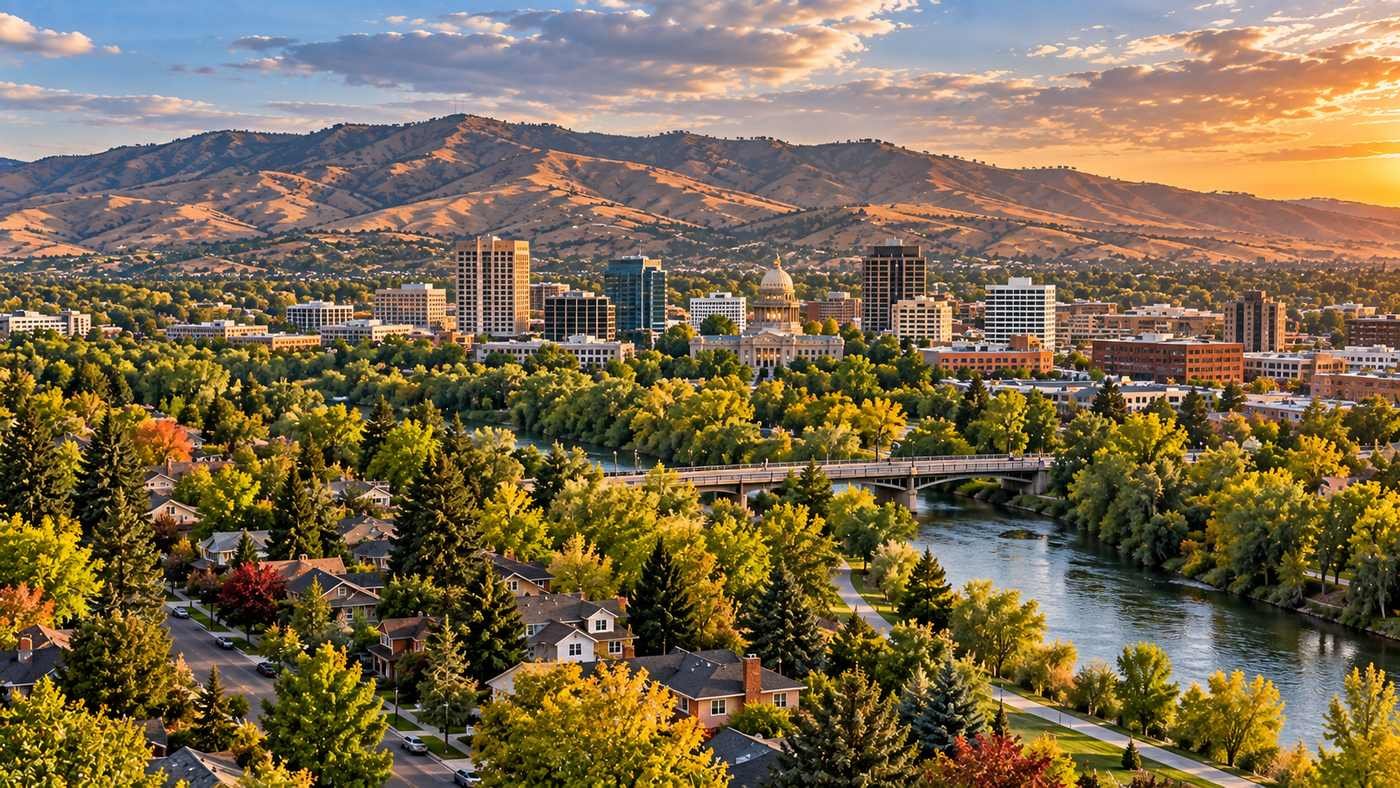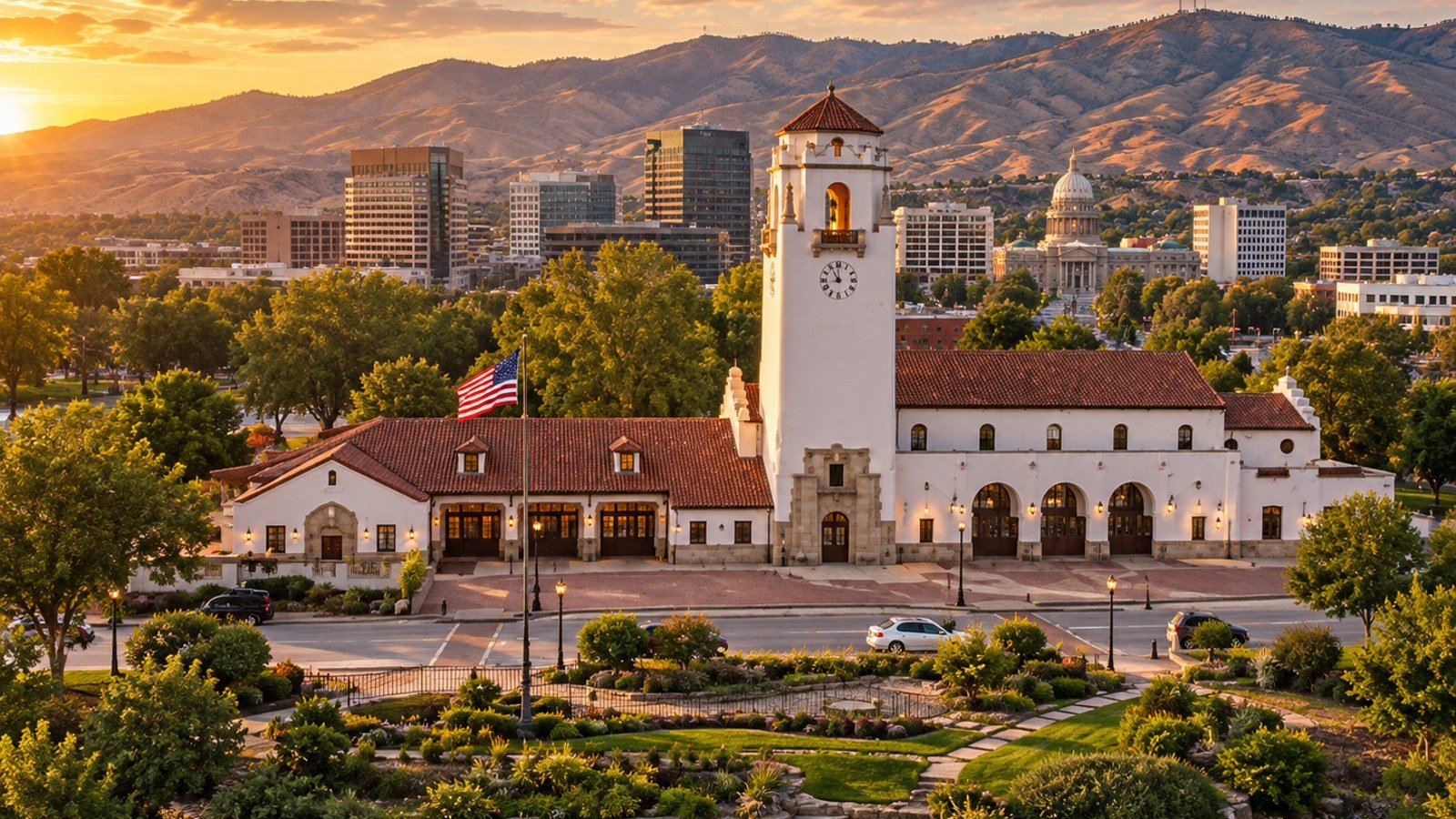
Boise’s East End is where several versions of the city collide.
Historic homes line tree-covered streets. Warm Springs Avenue runs beneath the foothills. The Boise River and Greenbelt form the neighborhood’s southern edge. And within minutes you can go from an old residential district to a riverfront park to one of Boise’s most recognizable foothills viewpoints.
Here is how to explore it.
Start With Warm Springs Avenue
Warm Springs Avenue is the backbone of the East End.
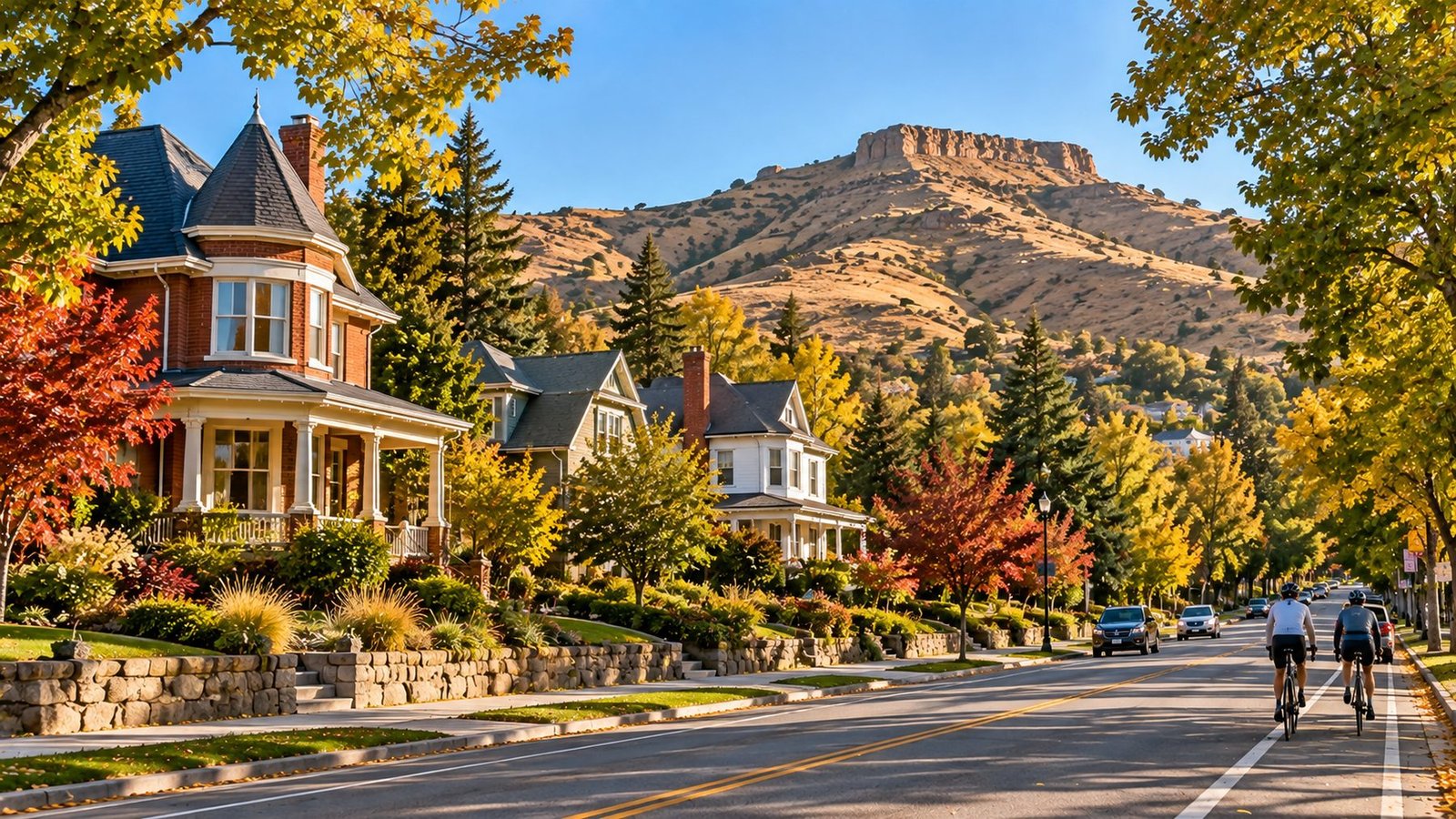
The avenue is lined with some of Boise’s most recognizable historic homes and connects downtown with the eastern foothills and Boise River corridor.
The reason it is called Warm Springs is literal. Geothermal water helped drive development here during the late 1800s, and the corridor became one of Boise’s early prestige residential areas.
Look at the Historic Homes
If you like architecture, this is one of the best parts of Boise to simply drive or walk slowly through.
Warm Springs includes Queen Anne Victorian, Colonial Revival, Tudor Revival, Mission Revival, Craftsman, and bungalow architecture.
The key is not finding one specific house. It is seeing how many different eras of Boise architecture sit together within the same neighborhood.
Stop at The Roosevelt Market
The Roosevelt Market is exactly the kind of place that makes a neighborhood guide more useful than a generic attractions list.
Located at 311 N. Elm Avenue, it operates as a neighborhood market, cafe, sandwich shop, coffee stop, and gathering place.
This is a good starting point for an East End morning because it actually feels connected to the residential neighborhood around it rather than being another downtown destination.
Good fit for: Coffee, sandwiches, breakfast, neighborhood atmosphere, and grabbing something before heading toward the foothills.
Visit Kristin Armstrong Municipal Park
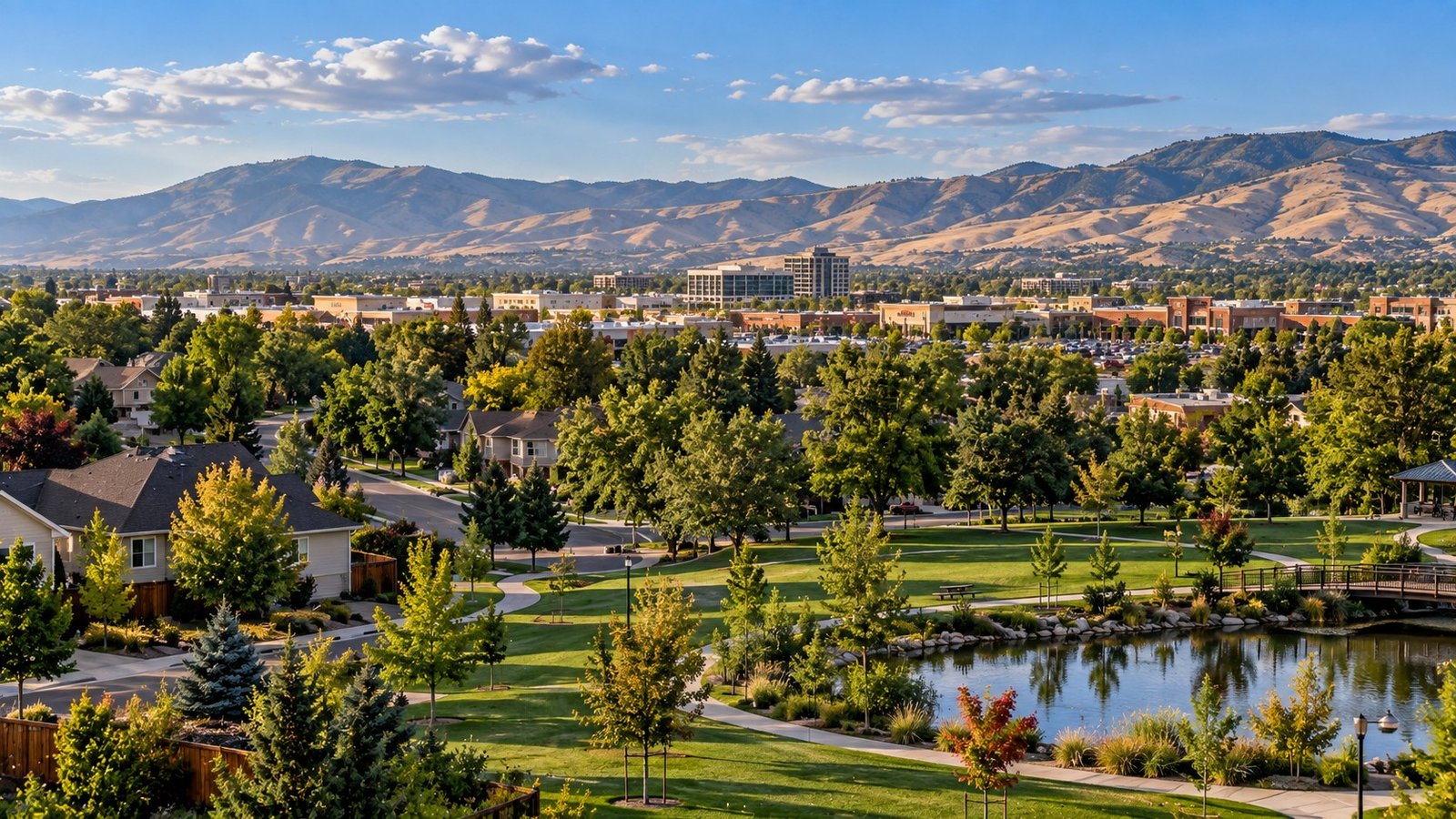
Kristin Armstrong Municipal Park is one of the East End’s most useful public spaces.
It has mature shade trees, a large lawn, playground, picnic areas, bocce courts, and direct Greenbelt access. The M.K. Nature Center sits immediately beside it.
That combination makes it particularly good for families. You can picnic, let kids use the playground, walk the Greenbelt, and visit the Nature Center without driving anywhere else.
Explore the M.K. Nature Center
The M.K. Nature Center is one of the easiest family-friendly stops in this part of Boise.
Operated by Idaho Fish and Game, it sits directly off the Greenbelt and uses short walking paths and interpretive areas to introduce visitors to Idaho fish, wildlife, and river habitat.
It is small enough that you do not need to block out half the day. Pair it with Kristin Armstrong Municipal Park and the Greenbelt and it becomes part of a much better outing.
Walk or Bike the Greenbelt
The Boise River Greenbelt runs along the southern edge of the East End.
From Kristin Armstrong Municipal Park, you can head west toward downtown and Julia Davis Park or continue east toward the Warm Springs and Barber Valley areas.
That gives the East End an unusual combination of historic-city neighborhood and direct river recreation.
Head Toward Table Rock
Table Rock is one of Boise’s signature viewpoints.
The sandstone mesa rises directly above the East End and provides broad views of downtown Boise, the Treasure Valley, and surrounding foothills.
Most visitors approach from the Old Idaho Penitentiary area.
Vehicle access to the top is closed, so plan to walk or ride.
That is probably for the best anyway. Driving to the top was never really the point.
Use the Old Penitentiary Trailhead
The Old Idaho Penitentiary area is the primary starting point for the classic Table Rock climb.
The climb is not particularly long, but it is steep enough that nobody is going to confuse it with a relaxed Greenbelt walk.
Bring water. Especially in summer.
Explore Chief Eagle Eye Reserve
Chief Eagle Eye Reserve sits near the Table Rock and Old Penitentiary area.
It gives you another way to experience the East End foothills without necessarily committing to the primary Table Rock climb.
It also connects into the larger story of Boise sandstone, foothills habitat, and the landscape immediately above the historic neighborhood.
Play Warm Springs Golf Course
Warm Springs Golf Course sits along the Boise River at 2495 E. Warm Springs Avenue.
It is an 18-hole municipal course with a driving range, instruction, junior programming, and a clubhouse restaurant and bar.
Even if you do not play golf, its location matters because this part of the neighborhood is where the Boise River, Greenbelt, Warm Springs corridor, and foothills trail access start overlapping.
The Geothermal Story Is Bigger Than the Street Name
One of the East End’s most interesting details is how geothermal water shaped the neighborhood.
After warm water was discovered in the late 1800s, geothermal heating became a selling point for the grand homes being built along Warm Springs Avenue.
That connection still helps explain why Warm Springs looks the way it does today.
The neighborhood was not simply suburban expansion. It was one of Boise’s early planned residential destinations.
East End vs. North End
These neighborhoods get compared because both are historic and close to downtown.
But they feel different.
The North End revolves heavily around Hyde Park, Camel’s Back, walkable residential streets, and a dense neighborhood commercial center.
The East End feels more spread along a corridor. Warm Springs Avenue, the river, large parks, Table Rock, Military Reserve, and the foothills dominate the experience.
Compare it with The Ultimate Guide to Boise’s North End.
Neither needs to win. They are just different ways to experience the city.
Best East End Walk
For something relaxed, do not try to turn the whole neighborhood into one giant walking loop.
Start near The Roosevelt Market.
Walk through the residential streets toward Warm Springs Avenue.
Spend time looking at the historic architecture.
Drive or bike down toward Kristin Armstrong Municipal Park.
Walk part of the Greenbelt.
If you still have energy, finish near the Old Penitentiary and Table Rock area around sunset.
That gives you most of what makes the East End distinctive without spending the entire day walking alongside a major road.
A Perfect East End Morning
A simple itinerary:
Morning: Coffee or breakfast at The Roosevelt Market.
Late morning: Explore historic Warm Springs Avenue.
Midday: Picnic or walk at Kristin Armstrong Municipal Park.
Early afternoon: Visit the M.K. Nature Center.
Later: Walk or bike the Greenbelt.
Evening: Hike toward Table Rock if the weather and trail conditions cooperate.
That is a very Boise day. Coffee. Historic houses. River. Foothills. A hill that makes you question why you chose the steep route.
Best Time to Visit
Spring may be the best hiking season because the foothills are green and temperatures are usually comfortable.
Summer is great for the Greenbelt and river corridor, but Table Rock can become extremely hot during the middle of the day.
Fall is excellent for Warm Springs architecture, mature neighborhood trees, and cooler hiking weather.
Winter can be beautiful, but foothills trails should be avoided when muddy because using wet trails can cause significant trail damage.
For a first visit, I would pick spring or October.
2026 Heritage Homes Tour
Preservation Idaho’s 20th Annual Heritage Homes Tour is scheduled for October 4, 2026, focusing on the Mobley Drive area off Warm Springs Avenue.
The 2026 tour highlights mid-century homes and gives the East End another strong connection between architecture, history, and current events.
That deserves its own Events article closer to the date.
What Is It Like to Live in Boise’s East End?
Like the North End, this deserves a separate moving-focused article.
But the defining characteristics include quick downtown access, historic housing, Warm Springs Avenue, Boise River and Greenbelt access, foothills trails, Table Rock, Military Reserve, neighborhood parks, mature landscaping, and relatively limited neighborhood commercial development.
That last point matters. This is not Hyde Park. You are getting recreation and proximity rather than a dense collection of restaurants on every corner.
Pair the East End With Downtown
This is probably the easiest pairing.
Start downtown. Grab breakfast or coffee. Explore the Basque Block or museums. Then follow Warm Springs Avenue east.
Within minutes the dense downtown grid transitions into historic homes, parks, river access, and foothills.
Use The Ultimate Guide to Downtown Boise as the natural companion to this guide.
Connect It to the Rest of YoBoise
Explore Downtown with The Ultimate Guide to Downtown Boise.
Compare neighborhoods with The Ultimate Guide to Boise’s North End.
For trails, use Best Easy Fall Hikes Near Boise, Idaho in 2026.
Find coffee with Best Coffee Shops in Boise, Idaho in 2026.
Start earlier with Best Breakfast and Brunch Spots in Boise, Idaho in 2026.
For seasonal color, see Best Places to See Fall Colors Near Boise, Idaho in 2026.
For current plans, check Best Events in Boise This Weekend: September 25-27, 2026.
The Bottom Line
Boise’s East End is one of the best examples of why Boise feels different from a lot of growing Western cities.
The neighborhood has history without feeling frozen in time.
The river is right there.
The foothills are right there.
Downtown is right there.
You can walk past a century-old home, ride the Greenbelt, picnic beneath mature trees, and climb Table Rock in the same day.
You might even play 18 holes in between.
Although at that point you are clearly trying too hard.
This post may contain affiliate links. We may earn a commission when you purchase through links on this site at no additional cost to you.