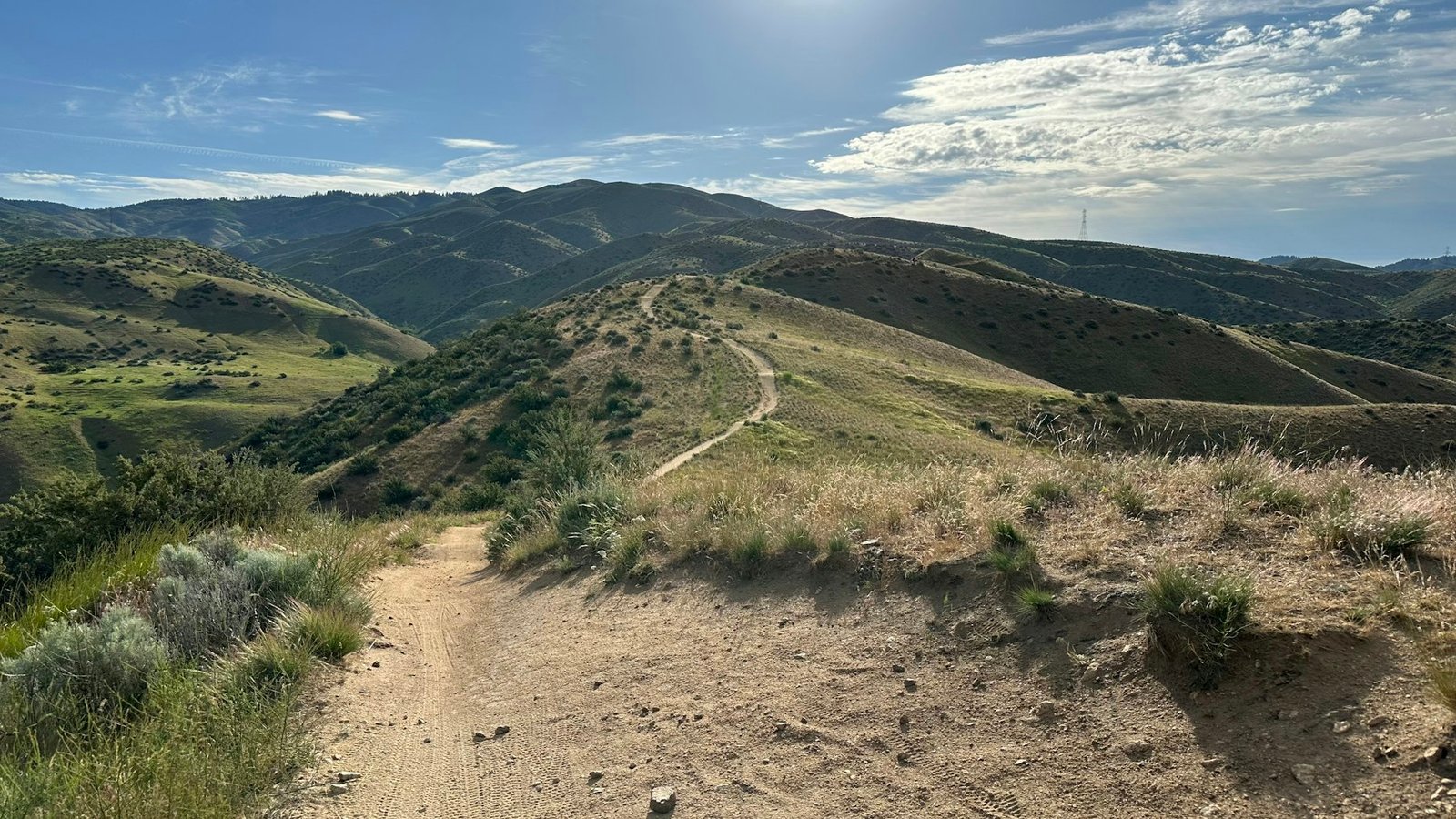
Electric dirt bikes and high-powered e-motorcycles are getting easier to buy, quieter to ride, and harder to distinguish from ordinary e-bikes at a glance.
That does not mean they can go anywhere a bicycle can go in the Boise Foothills.
Ridge to Rivers issued a specific warning in March 2026 after staff and residents reported gas- and electric-powered motorcycles on popular non-motorized trails around Hulls Gulch, Camel’s Back and Military Reserve. The basic rule is straightforward: motorcycles and e-motorcycles are prohibited on most Boise Foothills trails and belong only on routes specifically designated for motorized use. Ridge to Rivers guidance
That distinction matters because the Ridge to Rivers system sits right against the city and gets heavy use from hikers, runners, mountain bikers, families, dog walkers and equestrians. A machine that is quiet enough not to sound like a dirt bike can still have dirt-bike-level weight, speed and trail impact.
Here’s what Boise riders and parents need to know before unloading one.
The Simple Rule: Check Whether the Trail Is Motorized
If you remember only one thing, make it this:
Do not assume a trail allows an e-motorcycle just because you see bicycles on it.
Ridge to Rivers says all motorized vehicles, including ATVs and e-motorcycles, must remain on trails marked open to motorized use. Off-trail riding is prohibited.
That immediately rules out many of the foothills trails people are most familiar with.
Ridge to Rivers specifically called out recent e-motorcycle use in Hulls Gulch, Camel’s Back and Military Reserve as examples of popular areas where riders had been showing up on non-motorized routes.
The easiest way to avoid a problem: Before riding, open the current Ridge to Rivers map and confirm that your exact route is marked for motorized use. Don't rely on seeing tire tracks or another rider doing it.
Where E-Motorcycles Can Be Ridden
There are legitimate motorized riding opportunities on the Boise Front.
In its March 2026 notice, Ridge to Rivers specifically recommended 8th Street up to Ridge Road, 8th Street Motorcycle Trail #4 and Femrite’s Patrol Trail #6 for e-motorcycle use. It also noted that additional seasonal motorized routes opened April 15 for the 2026 season.
Ridge to Rivers' current trail-etiquette information lists these routes among trails or roads open to motorized users:
8th Street Motorcycle Trail #4
East Highland Valley Road
Femrite’s Patrol Trail #6
Lucky Peak Road #8
Shaw Mountain Road – E
Because allowable use can depend on the specific vehicle, land manager and seasonal designation, riders should verify the current map instead of treating any static list as permanent. Current trail etiquette and motorized-use guidance
Why 8th Street Is Worth Knowing
The 8th Street corridor is one of the more obvious places to start if you're trying to understand Boise's motorized foothills access.
But “motorized” does not mean “wide open.”
Ridge to Rivers specifically asks motorized users to slow down on the portion of Motorcycle Trail #4 between the motorcycle parking lot and the Fat-Tire Traverse Trail #4C junction because that section gets substantial hiking, running and mountain-bike traffic.
That is an important piece of Boise trail culture: even on a legal motorized route, you are often sharing the trail.
Why E-Motorcycles Are Becoming a Bigger Issue
The problem is not just noise.
In fact, electric motorcycles can be easier to overlook precisely because they are quieter.
Ridge to Rivers says trail staff have encountered high-powered electric vehicles in non-motorized areas and notes concerns about their weight and speed around other trail users. The agency also documented trail damage associated with off-trail motorcycle use near Kestrel Trail in Hulls Gulch Reserve.
The Boise Foothills are a natural-surface trail system. Cutting corners, climbing hills away from designated routes or spinning a powered rear tire through soft tread can create erosion and widen trails much faster than simply staying on the established route.
Ridge to Rivers' general etiquette is the same regardless of what you're riding: stay on designated trails and don't use them when conditions are wet enough that you're leaving tracks.
An E-Motorcycle Is Not Something to Treat Like a Regular Mountain Bike
This is where confusion starts.
Modern electric machines exist on a spectrum. One end looks like a traditional pedal bicycle with modest electric assist. At the other end are high-powered machines with motorcycle-style frames, throttles, suspension, tires and performance.
You do not need to become an expert in motor specifications before every ride.
For the Ridge to Rivers system, the practical question is simpler:
Does the route permit motorized use?
Ridge to Rivers currently treats e-bikes as motorized devices within its trail system and generally limits them to trails and roads already open to motorized traffic. About 52 miles of motorized trails and primitive roads are available to e-bikes in the system. Ridge to Rivers e-bike guidance
That means even someone riding a conventional pedal-assist e-bike should not assume that every mountain-bike trail is automatically legal for electric assistance.
A high-powered electric dirt bike deserves even more caution.
What About BLM and Forest Service Trails?
The Boise Foothills are not controlled by one single landowner.
The Ridge to Rivers network crosses land managed by different public agencies, including federal land.
Ridge to Rivers states that e-bikes and other motorized devices are not allowed on non-motorized trails crossing Bureau of Land Management or U.S. Forest Service property.
This is another reason the phrase “I've ridden this trail before” is not enough.
Two trails that look nearly identical on the ground can have different rules because of where they go and who manages the land.
Use the interactive Ridge to Rivers map and current trail designation rather than making assumptions based on terrain or past use.
There's a Separate Accessibility Exception
There is an important distinction for people using powered mobility devices because of a disability.
The City of Boise has an accessibility policy covering certain Other Power-Driven Mobility Devices, or OPDMDs, on City-owned trails. Qualifying individuals may be able to use certain powered devices on specified trails where normal recreational motorized use is restricted. Accessibility information
That is not a blanket exemption for recreational e-motorcycle riding.
The city's accessibility guidance says some trails remain closed or restricted and that devices must stay within the established trail footprint. For its optional accessibility pass, Boise asks for documentation that the device's motor is no more than 750 watts and its maximum speed is 20 mph.
If you're using a powered mobility device because of a disability, check Boise Parks and Recreation's current OPDMD guidance instead of relying on general recreational e-bike rules.
Parents Should Pay Particular Attention
Ridge to Rivers specifically noted that electric dirt bikes and similar machines are becoming popular among kids and teens.
That makes this less of a niche motorcycle issue than it used to be.
A family can purchase an electric dirt bike that looks relatively harmless compared with a gas-powered motorcycle, load it into a truck, and be at a Boise trailhead without realizing they're entering a heavily used non-motorized area.
Before a young rider goes out, confirm three things:
The exact trail permits the vehicle.
The route is currently open to motorized use.
The rider understands that shared-use does not mean unlimited speed.
That five-minute check can prevent an uncomfortable confrontation—and potentially a collision.
How to Ride Responsibly on Boise's Motorized Trails
Legal access is only part of the equation.
Ridge to Rivers asks motorized users to ride when trails are firm and dry and to avoid creating ruts. Its broader trail guidance also emphasizes staying on the trail, avoiding switchback cuts and respecting other users.
For an e-motorcycle rider, that translates into a few practical habits:
Slow down well before hikers, runners, cyclists or horses.
Expect people around blind corners.
Stay on the designated tread.
Don't climb hillsides or create shortcuts.
Avoid wet or muddy trails.
Treat mixed-use routes as shared space, not a private riding area.
Check current closures before leaving home.
Boise's foothills are unusually accessible from the city, which is exactly why courtesy matters so much.
What If You See an E-Motorcycle on a Closed Trail?
You don't need to become trail enforcement.
Ridge to Rivers says its staff focus heavily on education, and its trail employees themselves do not have enforcement authority. The organization specifically advises users not to confront others and instead encourages people to direct riders toward current Ridge to Rivers information when appropriate.
If a situation appears dangerous, use common sense and avoid escalating it.
The goal is getting people onto the right trails, not starting an argument halfway up the foothills.
Check the Map Every Time
Trail access can change because of season, weather, fire, construction, wildlife concerns or land-management decisions.
As of September 2026, Ridge to Rivers continues to display its e-motorcycle warning and current motorized-use information on its website. Ridge to Rivers
Before riding:
Check the Ridge to Rivers interactive map.
Review current trail conditions and closures.
Confirm that the specific route is open to motorized use.
If you're unsure about your machine, contact Ridge to Rivers or Boise Parks and Recreation before riding.
It's a lot easier than hauling a bike to a trailhead and discovering you picked the wrong place.
Bottom Line
Boise does have places to ride e-motorcycles in the foothills.
Most foothills trails are not those places.
The safest rule is to treat an e-motorcycle as a motorized vehicle and ride only routes clearly designated for motorized use. Routes around 8th Street, Ridge Road and several designated motorcycle and patrol trails provide legitimate options, while popular non-motorized areas such as portions of Hulls Gulch, Camel's Back and Military Reserve should not be treated as electric dirt-bike playgrounds.
Quiet doesn't mean non-motorized.
Check the trail designation, stay on the route and share the foothills responsibly.
This post may contain affiliate links. We may earn a commission when you purchase through links on this site at no additional cost to you.